
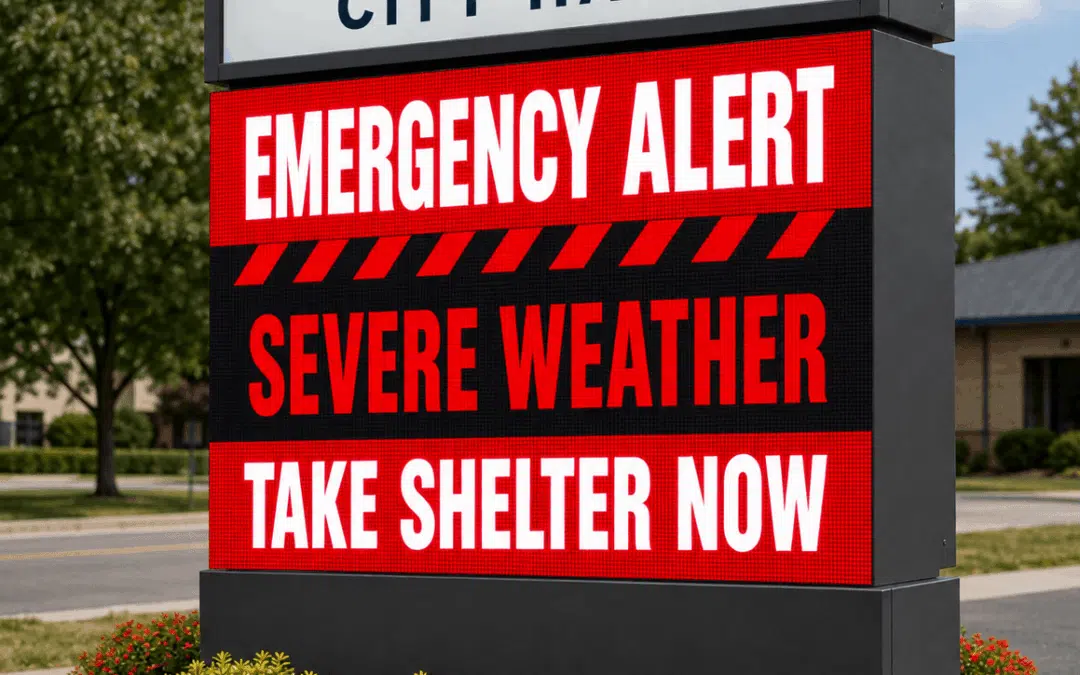
When a civil emergency message hits your phone or interrupts TV, it can be confusing—and in a real situation, confusion costs time. At Golden Rule Signs, we help communities and businesses make emergency messaging clearer and more visible by sharing critical updates on digital LED signs built to display time-sensitive public safety messages when they matter most.
This guide explains what civil emergency messages are, how common alert systems work (like WEA and EAS), what to do when you—or your customers—ask “what alert did I just get?”, and how digital signage can help make your community safer.
What is a civil emergency message?
A civil emergency message is an official warning used to share urgent safety information for a specific area. It may be issued for events like hazardous material incidents, law enforcement activity, evacuation orders, shelter-in-place instructions, major infrastructure failures, or other immediate public safety concerns.
The most important thing to know: these messages are designed to be actionable. They typically tell you what is happening, where it is happening, and what to do next.
Where you might see these alerts (WEA, EAS, and local notifications)
Emergency messaging is delivered through multiple channels because no single method reaches everyone at the right moment. The most common sources people recognize include:
- Wireless Emergency Alerts (WEA): Short, attention-grabbing alerts delivered to compatible mobile phones in a targeted geographic area.
- Emergency Alert System (EAS): The system that interrupts radio and TV programming to deliver emergency information (including tests).
- Local emergency notification systems: City/county opt-in alerts via SMS, phone, or email that often provide more detail than a short phone alert.
Many people search phrases like “what was the emergency alert today” because the alert sound is startling and the message is brief. That’s exactly why adding high-visibility, plain-language messaging in public places can make a real difference.
What does EAS mean? What is an EAS alert?
EAS stands for the Emergency Alert System. An EAS alert is a broadcast-based warning that can carry national, state, or local emergency information. You may also encounter an alert system test, which helps ensure the system works when a real emergency occurs.
Why your phone got the alert (and why not everyone sees it)
WEA alerts are typically location-based. If your phone is in the alert area, you may receive it even if you do not live there. If you’re outside the targeted zone, you may not receive the alert at all.
That’s why additional channels matter. Someone driving through town, working outdoors, visiting a campus, or entering a retail center may miss a phone alert (dead battery, silent mode, poor service, or distraction). Public-facing messaging helps fill those gaps.
How Golden Rule Signs helps spread emergency messaging
At Golden Rule Signs, our digital LED signs are equipped to distribute emergency messaging quickly across your display so time-sensitive information can be seen right where people are. In practice, that means your sign can help amplify important instructions in a format people can read while they’re already out in the community.
Digital LED signage supports emergency communication by providing:
- Immediate visibility: A bright, always-on display that can share alerts beyond phones and TVs.
- Clear, plain-language instructions: Short, readable messages like “SHELTER IN PLACE,” “AVOID MAIN ST,” or “EVACUATE NORTH OF RIVER.”
- High-traffic reach: Messaging on roads, campuses, municipal buildings, schools, and community hubs.
- Fast updates as situations change: Replace outdated information in minutes or seconds—not hours.
- Reinforcement across channels: Repeat key instructions people may have missed or misunderstood on other platforms.
Examples of emergency messages that work well on LED signs
Because an LED sign is a quick-read medium, the best messages are short, specific, and action-oriented. Examples include:
- Public safety: “POLICE ACTIVITY—AVOID DOWNTOWN”
- Severe weather: “TORNADO WARNING—SEEK SHELTER NOW”
- Hazmat: “CHEMICAL SPILL—SHELTER IN PLACE”
- Evacuation: “EVACUATION ORDER—GO WEST ON HWY 8”
- Utilities: “BOIL WATER NOTICE—CITYWIDE”
- Test messaging: “ALERT SYSTEM TEST—NO ACTION NEEDED”
Best practices for readable, responsible emergency messaging
To make LED-based emergency messaging effective (and reduce panic), we recommend:
- Lead with the action: EVACUATE, SHELTER, AVOID, BOIL WATER, SEEK SHELTER.
- Include the location: “NORTH OF I-10,” “DOWNTOWN,” “RIVERFRONT.”
- Keep it short: Fewer words, high contrast, large characters.
- Use consistent language: Match the wording your local officials are using when possible.
- Point people to updates: Add a trusted source when space allows (city website, local emergency management, or “TUNE TO LOCAL NEWS”).
- Update and clear quickly: Post updates as conditions change and share an “ALL CLEAR” when appropriate.
How do I get emergency alerts on my phone (and why signage still matters)?
If you—or your customers—ask “how do I get emergency alerts on my phone?”, most modern devices support Wireless Emergency Alerts. Settings are typically found under “Emergency Alerts,” “Government Alerts,” or “Wireless Emergency Alerts.” Even with alerts enabled, phones can be off, silenced, out of service, or simply missed. Digital signage adds a public layer of communication that helps close that gap.
The takeaway: understanding alerts + spreading them makes communities safer
Civil emergency messages, WEA alerts, and the EAS alert system are all designed to move urgent information fast. The more places a clear message appears, the more likely people are to see it, understand it, and take the right action.
At Golden Rule Signs, we believe digital LED signage can be a practical part of that safety network—helping communities share emergency instructions quickly, reduce confusion, and support a safer response when every minute counts.